





















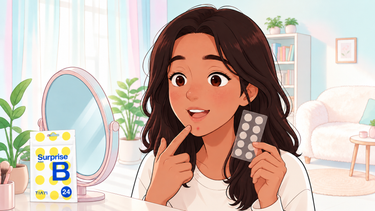
A new spot appears right before an important day. The urge to squeeze it is strong. A pimple patch is the better option, as long as you use it on the right kind of spot.
How pimple patches work
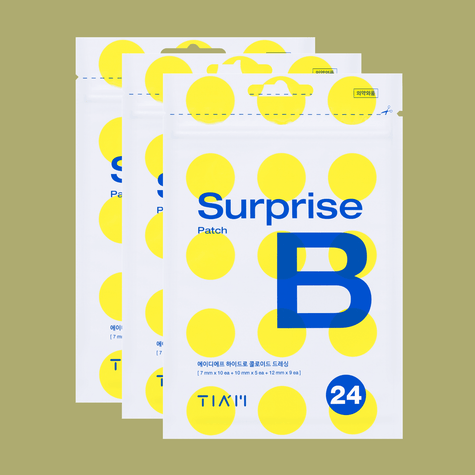
Most pimple patches are made of hydrocolloid, a material used in wound care. The TIA'M Surprise B Patch is one of them.
- Absorbs: draws out oil and fluid from the spot
- Protects: creates a barrier against dirt and outside irritants
- Stops picking: keeps your fingers off the spot
- Fits the spot: TIA'M patches come in 3 sizes
Which spots they work best on
- Best: spots with a white or yellow head and spots that have already opened
- Less effective: deep, hard, painful bumps under the skin with no head
How to use them
- Cleanse your face and dry it completely.
- Do not apply toner, serum, or cream on the spot. The patch sticks best to clean, dry skin.
- Pick a size that covers the whole spot.
- Press it on and hold for a few seconds.
- Leave it on overnight, or until the patch turns white.
- Peel it off gently and use a fresh patch if needed.

Why bedtime is the best time
Overnight gives the patch hours of uninterrupted contact, and you are not touching your face while you sleep. You can apply the rest of your skincare around the patch.
Common mistakes
- Squeezing first: this pushes bacteria deeper and can leave a mark.
- Applying over skincare: the patch will not stick properly.
- Reusing a patch: always use a fresh one.

Frequently asked questions
How long should I keep a patch on?
Overnight, or until it turns white. Then replace it.
Will a patch stop new breakouts?
No. It treats one spot at a time. For regular breakouts, you need a daily routine too.
When should I see a doctor?
If you get deep, painful spots often or breakouts that leave scars, see a dermatologist.
Have a question about your skin or hair? Message us on Instagram or WhatsApp us on +94 77 846 5000. We're happy to help.


