























Dark spots are the concern we get asked about most. Post-acne marks, sun spots, melasma, and uneven patches that have been there for years. Korean skincare has good tools for this, but the results depend almost entirely on getting two things right, and most people only do one of them.
First, work out what kind of mark you have.
They look similar and behave completely differently.
Post-inflammatory hyperpigmentation (PIH)
Flat brown or grey marks left after a spot heals. Very common in medium and deep skin tones. These fade on their own eventually, and brightening ingredients speed it up meaningfully. The most treatable type.
Post-inflammatory erythema (PIE)
Flat pink or red marks after a spot. This is damaged capillaries, not pigment. Brightening serums do very little. Barrier care, Centella, and time do more. If your marks are red rather than brown, you have been using the wrong products.
Sun spots
Brown patches on areas with the most sun exposure: cheekbones, forehead, and backs of hands. Respond well to consistent treatment but take longer than PIH.
Melasma
Larger symmetrical patches, often across the cheeks, upper lip or forehead. Frequently hormonal, triggered by pregnancy or contraception, and worsened by heat as well as UV. The hardest type. It recurs, it needs ongoing management rather than a cure, and it genuinely warrants seeing a dermatologist.
The two things that actually matter
One: an ingredient that slows melanin production.
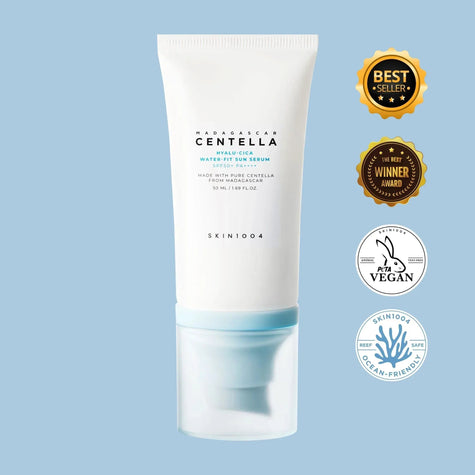
Two: daily sunscreen, without exception.
The second is not optional advice; it is the mechanism. Pigment cells respond to UV by producing more melanin. If you use a brightening serum at night and skip sunscreen in the morning, you are removing pigment at one rate and creating it at a faster one. This is the single reason most people conclude brightening products "don't work."
In Sri Lanka, where the UV index is extreme year-round, this matters more than almost anywhere. Heat alone also aggravates melasma, independent of UV.

Which ingredient for which mark?
Niacinamide
The safest starting point. Works on all pigment types, suits every skin type, rarely irritates, and also controls oil and strengthens the barrier. Two to five percent is plenty. If you use one active, use this.
Alpha arbutin
Targets melanin production more directly than niacinamide. Pairs well with it. The combination is the most reliable option for post-acne marks. Beauty of Joseon's Glow Deep Serum and AXIS-Y's Dark Spot Correcting Glow Serum are both built around this approach.
Vitamin C
Best for overall dullness and sun damage, and it works as an antioxidant under sunscreen. Pure ascorbic acid at high concentration works fastest but oxidizes quickly, especially in heat. If your serum has turned orange or brown, it has lost most of its effect. Stable derivatives are the more practical choice in this climate.
Tranexamic acid
The one to try for melasma. It works on the signalling that triggers pigment production rather than on pigment already formed, which is why it suits hormonal patches other ingredients struggle with.
Retinal and retinol
Speeds up cell turnover so pigmented cells shed faster. Effective, but introduce it slowly, use it at night only, and be strict about sunscreen while using it.
A routine that works
Morning: gentle cleanser, niacinamide serum, moisturizer, SPF50+ PA++++.
Night: cleanse, alpha arbutin or vitamin C serum, moisturizer. Add retinal two nights a week once your skin tolerates the rest.
That is enough. Adding a fifth active does not double the speed; it doubles the chance of irritation, and irritation causes more pigmentation in the skin tones most prone to it.
How long it takes
- Post-acne marks: 8 to 12 weeks for visible change
- Sun spots: 3 to 6 months
- Melasma: 6 months or more, and it needs ongoing management
Photograph your face in the same light, at the same time of day, once a month. Daily mirror checks will tell you nothing.

Four things that make it worse
- Picking spots. Inflammation is what creates the mark. Squeezing extends it and can turn a mark into a scar.
- Over-exfoliating. Acids every day, plus retinol, plus a scrub, damage the barrier. Inflamed skin produces more pigment. Two to three times a week is enough.
- Skipping sunscreen on cloudy days or indoors near windows. UVA passes through both.
- Switching products every three weeks. Nothing here works in under two months.
A note on skin lightening
Brightening and lightening are different things. Everything above evens your tone by fading spots to match the rest of your face. None of it changes your natural skin color, and nothing should claim to.
Products promising dramatic whitening, particularly unregulated creams, have been found to contain mercury and high-strength steroids. These cause real, sometimes permanent, harm. If a product promises results that sound impossible, avoid it.
When to see a dermatologist
Melasma, spots that change shape or color, marks that have not budged after six months of consistent treatment, or any single spot that looks different from the others. A dermatologist has access to prescription options with far stronger evidence than anything sold over the counter.
Browse products for dark spots and hyperpigmentation, or start with sunscreen, which does more than any serum.


